


Hi NoGoodies,
Welcome to NoGood Insights, your bi-weekly pulse on all things growth. We break down successful brand campaigns, provide you with the best guides for all things growth marketing, and share emerging trends and insights to keep you ahead of the curve.
Here’s a quick TL;DR of what’s below:
Intellectualism just moved online, and audiences are now rewarding creators who teach instead of perform
Brands from Depop to Lightspeed Venture Partners are paying for proximity to expertise instead of buying reach the old way
The same forces that made intellectual influencers valuable also made them easy to fake, and AI just accelerated the gap
Real experts are now stuck competing on production value against people who have none, on a platform that rewards packaging over substance
Ready? Let’s get into it.
Intellectualism is so back, and it’s gone digital
Intellectualism goes back to Socrates and Plato in ancient Greece. It moved through the Enlightenment, the Renaissance, and the Industrial Revolution before landing here, in the intellectualism of the information age. It never really left. It just found new real estate.

That intellectualism can exist just about anywhere now. Globalization and internet accessibility opened the door for intellectual ideas to live on the same platforms as everything else, so Instagram, TikTok, and Substack became just as viable a home for a history lecture as they are for a dance trend.
How we got the intellectual influencer
Intellectualism online trickled in as people became fatigued with AI slop, brainrot, and superficial influencers. Pair that fatigue with the hard data that 78% of people prefer expert-level information over entertainment and that 74% of students utilize educational influencers for learning and the timing of the rise of intellectualism in influencing makes total sense.
The mass access to information, as well as the desire for it, has given way to a sort of commoditization of information. In late 2026, we’ve arrived at the intersection of accessible intellectualism, late stage capitalism, and modern marketing/advertising, which can be referred to as the intellectual influencer, or as what Battenhall describes as people who “gain trust through knowledge rather than popularity. They simplify complex ideas, break down research, explore history, science, culture or economics, and translate expertise into accessible, engaging formats. They are the intersection of education and entertainment, blending depth with platform-native storytelling.”
The brands are showing up
The intellectual influencer became monetized almost instantly. What started as a passion project to break down niche or academic topics turned into a real content category, and brands followed the audience.
Depop tapped Vivian Tu, founder of Your Rich BFF, to reframe resale through a financial literacy lens. Luggage brand July let Substack writer Zara Wong shape its move into handbags. Dior brought wellness podcaster Jay Shetty to Jonathan Anderson’s men’s debut, and Valentino has made “resident librarian” Jack Edwards a regular at its events, credibility he’s since converted into a contributing editor role at Esquire.

The finance and tech corner of the internet is running the same play. Claire Zau built an audience of over 350,000 explaining startup funding and AI news in plain language under the handle @Zauey. Lightspeed Venture Partners hired her into a hybrid investor-creator role, folding the explainer directly into the firm itself.
B2B LinkedIn creators are getting a lighter version of the same treatment, pulled into brand trips, given early product access, and sent merch, the enterprise equivalent of a gifting suite, because a founder’s trust in a niche expert closes more deals than an ad ever could.
The common thread across every industry is paying for proximity to expertise they didn’t build themselves.
The problem with intellectual influencers
Brands are borrowing the intellectual influencer’s actual currency, which isn’t just followers anymore, but also the presumption that they know something worth knowing.
Once brands started paying attention, the barrier to entry disappeared. Anyone could claim expertise without having any, and AI made faking it easy. A chatbot recombines what’s already been said, then hands it back dressed up as insight. The “intellect” on display is borrowed, not created. As Richard Miskolci puts it in his article “Intellectual Influencers: a brief historical introduction”, most intellectual influencers are simply “popularizers,” and audiences rarely catch the gaps in what they’re repeating.

The result is a flood of borrowed authority drowning out the people who actually did the work. Real expertise takes years to build; a prompt takes seconds. When both look identical on a 60-second video, the noise wins.
AI has made those gaps and weaknesses almost invisible. A creator asks Claude for an opinion, gets something flashy back, and turns it into a 60-second video that pulls a million views and a paid partnership. Eugene Healey has pointed out that these influencers are built for views first, and that the expertise tends to dissipate the moment they’re in a real conversation with a CMO or on a podcast longer than 60 seconds.
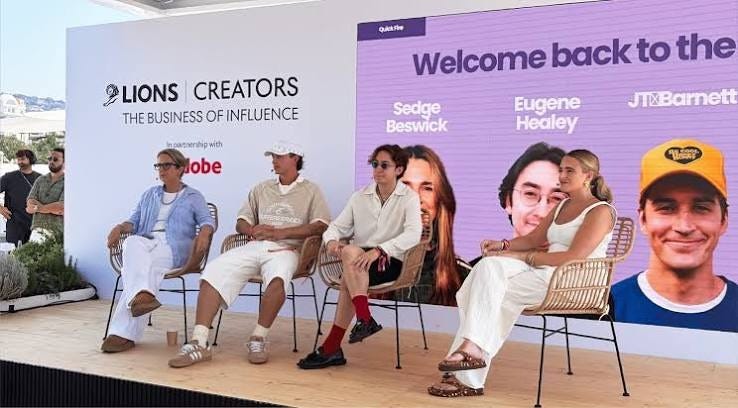
Joel Marlinarson calls it plainly: the intellectual influencer boom has created a new kind of grifter, one who needs little more than “very basic insight, mild levels of taste and zero credentials.” His fix is a checklist brands should be running before they sign anyone: does this person have real clients and outcomes beyond their own followers, credibility that exists off social media, and the ability to defend their thinking outside a scripted reel. As budgets keep shifting toward expert creators, that gap between the ones with real receipts and the ones without will only widen.

The skill set split
There’s a second layer to this nobody’s talking about, and that’s that reach and editing skill can now manufacture authority that used to take a career to earn. A sharp hook, a clean cut, and eighteen seconds of eye contact function as a credential in a feed that can’t tell the difference between someone who’s studied a subject for a decade and someone who asked Claude about it an hour ago.
The ability to manufacture authority has had a profound effect on real experts because now a researcher or specialist with real, hard-won knowledge still needs a hook, a face, and an editing rhythm if any of that expertise is going to translate into widespread reach.
Depth is expensive to build and cheap to fake, and the platform rewards whoever packages it best, regardless of whether you actually know what you’re talking about.
🚀 Ready to meet your NoGood partner?
Tell us where you are and where you want to be — and we’ll help get you there.