


Shortform-maxxing
Shortform-maxxing has arrived in 2026. Every social platform, every news outlet, every music app. According to TechCrunch Now HBO, Disney, and Netflix are joining in, each rolling out dedicated short form feeds inside their own apps.
Disney went a step further, striking a deal with TikTok that pipes fan-made Marvel, Pixar, and Star Wars edits directly into its own vertical feed.
HBO, Netflix, and Disney are framing this as a way to help people search massive catalogs and find the next thing to watch. The real story arrives a few years later than that explanation lets on, right after the clipping economy became a legitimate source of content consumption and ad revenue.
The history of clipping
That surge in clip culture didn’t come from the streamers, brands, or ad agencies. It came from fans, specifically fans of Twitch streamers like Kai Cenat and IShowSpeed, and long form YouTubers like Outdoor Boys. Unpaid fans, or “clippers,” took six hour uncut streams and hour long videos, spliced them into bite sized pieces, and posted them across social as fun, easily digestible content. The format hit instantly. Almost overnight, streamers and YouTubers who had never posted a single clip themselves became some of the most-seen creators on Instagram and TikTok.

Free labor doesn’t stay free once someone notices the value. Creators saw how much of their audience arrived through someone else’s edit, so marketplaces formed to pay clippers directly, per view, per hour. Unpaid fan labor quickly became a real labor market.
How clipping gets monetized
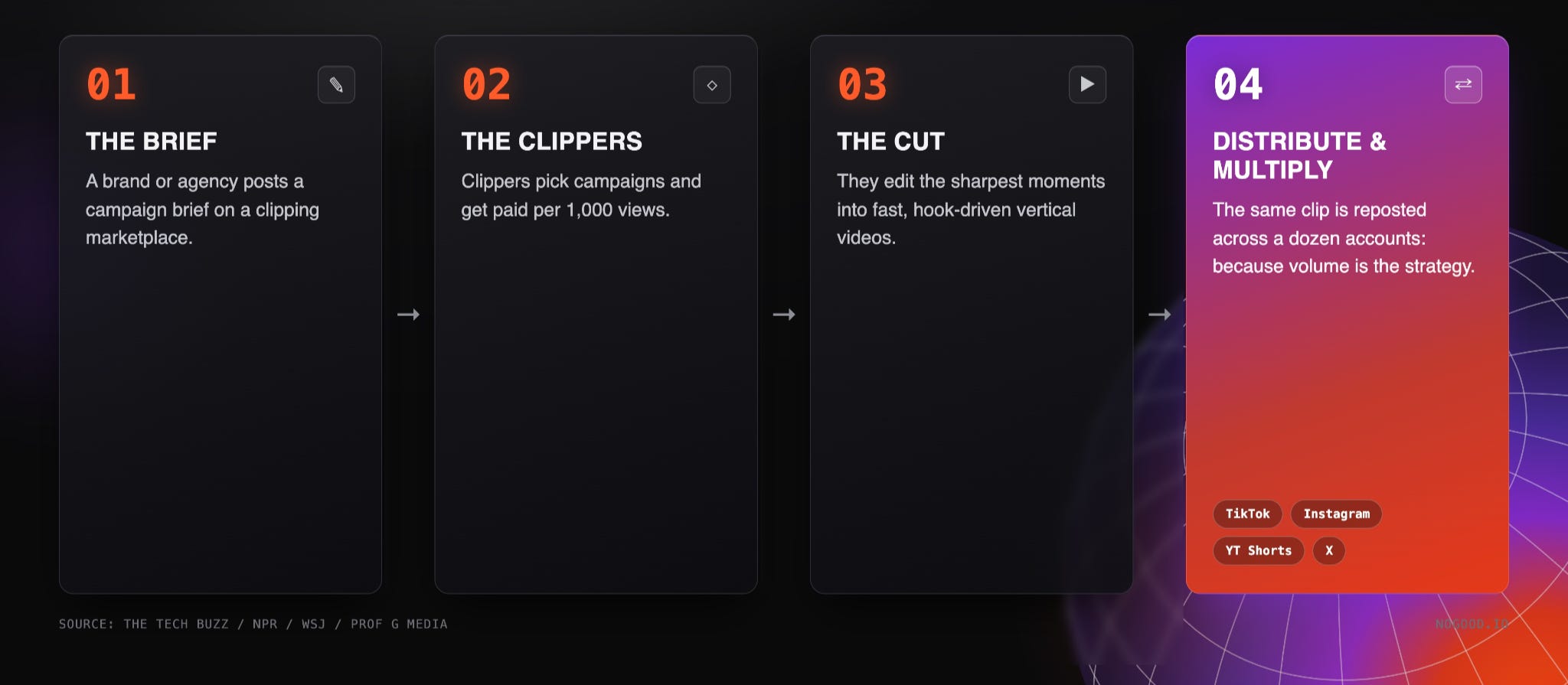
The mechanics are almost insultingly simple. A brand or creator posts a brief on a clipping marketplace, sometimes as targeted as a specific show, sometimes as loose as “clip anything from this catalog.” Clippers, often teenagers, pick a campaign, cut the sharpest moments into fast vertical edits, and blast them across TikTok, Instagram, YouTube Shorts, and X; the same clip reposted a dozen times through a dozen accounts, because volume is the whole strategy.
The money is enough to pull people out of other work entirely. NPR profiled a 25-year-old in Belgium stitching together odd jobs and overnight shifts before a single viral clip earned him $2,500 in two weeks.
According to Tech BUzz, Clippers get paid per thousand views, typically 30 cents to $6 depending on platform and niche, and it goes straight into a bank account or crypto wallet. Traditional paid placement runs $40 to $80 per thousand impressions; clipping gets comparable reach for a fraction of that.
The clipping economy at scale
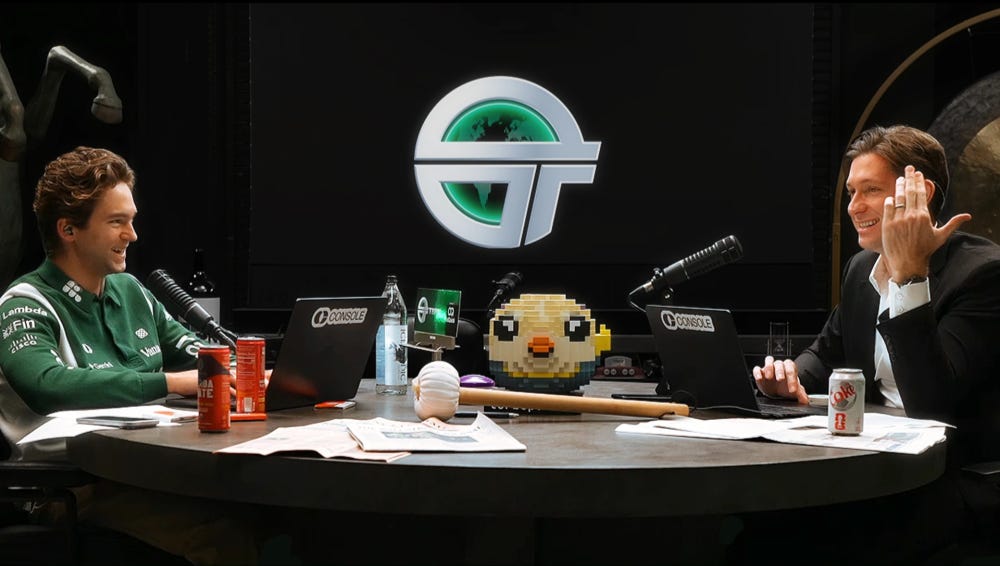
The scale and impact of clipping has far surpassed Twitch streamers and YouTubers, as Ed Elson reported in his article The Clipping Economy that TBPN, a daily tech podcast averaging roughly 7,000 live viewers per episode, reportedly landed a nine-figure sponsorship deal with OpenAI. The live audience had almost nothing to do with it. The audience watching the clips, re-clipped and reposted across the internet, had everything to do with it.
Fan edits and bootleg clips already let TikTok users watch an entire Netflix or HBO show in sixty second increments. Against that backdrop, the streaming service’s pivot to in-house short form stops looking like innovation. Disney isn’t clipping its own library because it discovered vertical video. Years of unauthorized fan edits already told it exactly which five seconds of a three hour show anyone actually wants to watch.
Do you think the clips and short form integrations are here to stay? Or are they just another phase that marketing is going through?