

Why Is MySpace Trying a Comeback in 2026?
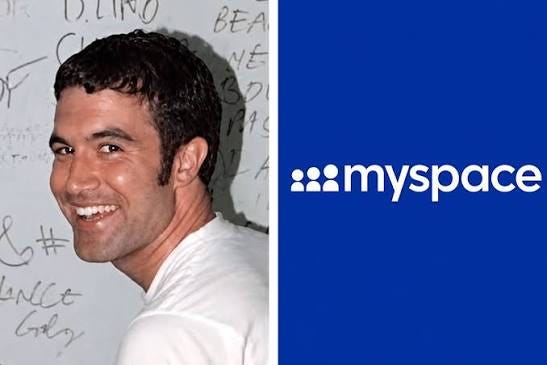
Myspace owners Tim and Chris Vanderhook confirmed in a new documentary that they’re eyeing a second MySpace relaunch. The first attempt, back in 2013, cost $150 million and failed to recapture the site’s original magic after years of the company changing hands. This one looks primed for the same fate as Tom Anderson isn’t involved, and details remain scarce, but the internet MySpace is walking back into looks nothing like 2013.
Social fatigue has hit a new high. Millennials and Gen Z are trading smartphones for flip phones; public profiles for privacy and community. Call it the offline movement, and MySpace’s quirky, customizable, community-first UI happens to fit the exact demographic driving it.
MySpace could be a genuine remedy for that fatigue, but it’s not the only one. Disdain for algorithmic feeds nobody asked for has already splintered users into private communities and niche platforms of their own.
How Infinite Scroll and Algorithmic Feeds Created Digital Fatigue
The digital fatigue fueling this retreat didn’t happen overnight and instead crept up over the last decade, driven largely by three developments that reshaped how the internet holds attention.
The first was infinite scroll, which removed the natural stopping point for scrolling on a phone or computer. It’s technically a 2006 Microsoft patent, though the design is largely credited to Aza Raskin. Worth noting: Raskin has since disowned it, regretting that the frictionless model he built for convenience got repurposed by ad-based companies to capture attention indefinitely.
The second came in 2016, when Instagram flipped from a chronological feed to an algorithmic one, explicitly because a scrambled feed kept people scrolling longer.
The third was TikTok’s 2018 “For You Page,” which broke the model further by ranking content on watch behavior instead of who you follow. Instagram, Twitter, and YouTube all adopted a version of it soon after.
All three got sold as “improving the user experience.” To their credit, they did, at first. But by 2026, that same architecture is behind a dopamine addiction epidemic: Sprout Social found that 63% of Gen Z planned social media detoxes in 2024, and 47% of people have deleted a social media app over the stress and anxiety from using it chronically.
The fatigue got visible enough that the same brands and tech companies who engineered it are now selling the exit. Pinterest ran a national ad campaign promoting going offline. Anthropic turned a coffee shop into a “zero slop zone.” OpenAI sold merch stamped “Pause. Play. Prompt.”
Still, fatigue isn’t the same as departure. The Global Statistics suggests it isn’t resolving into a mass exodus so much as a relocation, less time online overall, but a real shift toward subscriptions over algorithms and community over broadcast.
What Is Dark Socials, and Why Are Users Moving There?
A luxury on social media used to mean virality, reach, and influence. Under this relocation, a new luxury is taking shape: untrackability. Privacy, in the sense people actually mean it now, is about being unmeasured instead of unseen.
That untrackability is what defines dark social: platforms and spaces where analytics can’t follow, and where community, privacy, and exclusivity matter more than reach. Discord, DMs, group chats, Substack, etc.
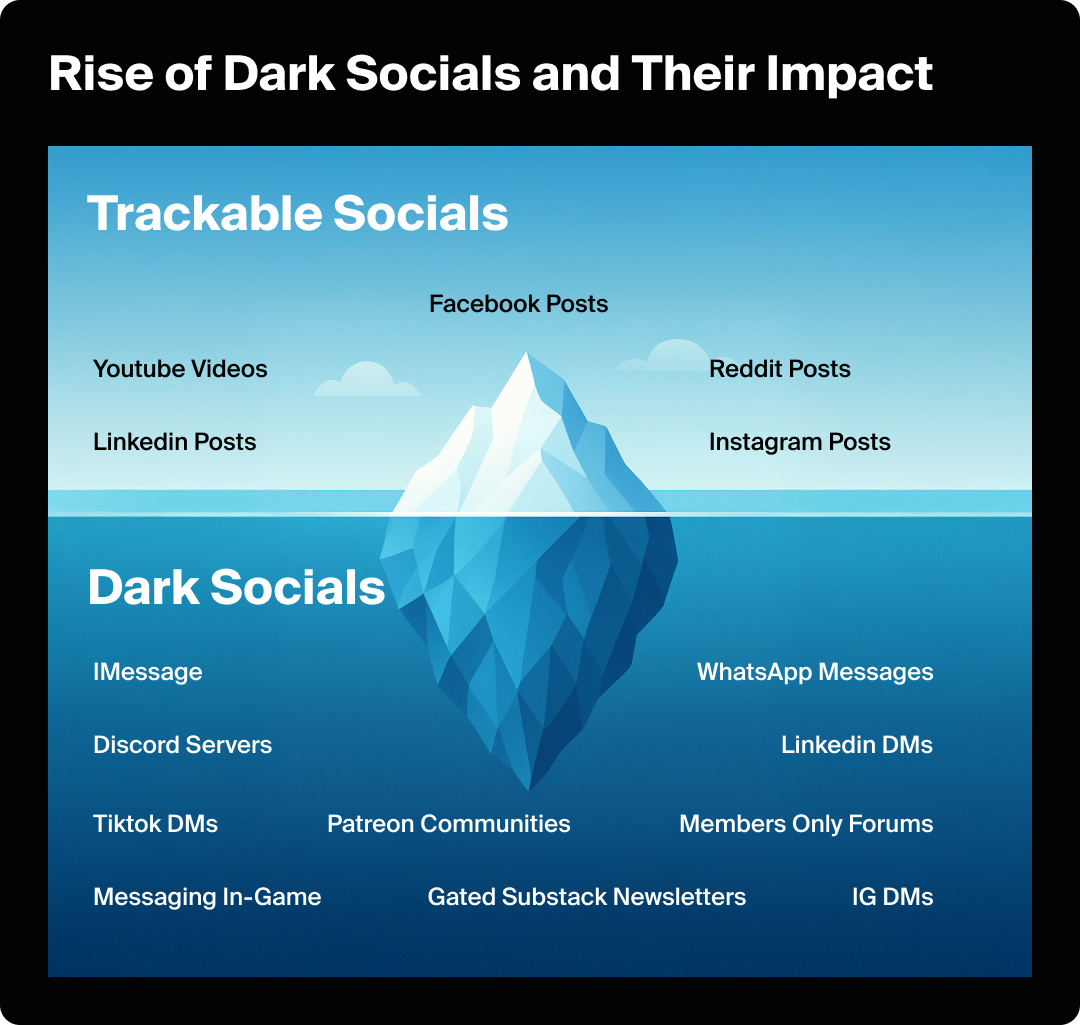
Discord is the clearest embodiment of the shift. A platform once built for gaming has grown into 259.2 million monthly active users, 78% of whom are there for reasons that have nothing to do with games. It has no algorithm, no For You Page, just 690 million registered accounts and 32.6 million servers built entirely on community and connection.
Substack proves the same pilgrimage in a different direction: subscriptions, maybe the most literal gate for privacy and exclusivity there is. Substack reports over 35 million active subscriptions and 5 million paid, a paid number that’s roughly doubled in two years. The platform takes no ad revenue and no algorithmic cut. Instead, it runs on a 10% fee that lets creators keep 90% of subscription revenue, the structural opposite of the feed model most people know. That combination makes Substack feel like something you’re in control of instead of just being an observer of it.
Even inside Instagram, TikTok, and Snapchat, the public feed is turning into a funnel toward private conversation. Instagram’s Broadcast Channels are one version of that funnel, letting pages launch semi-private communities that have only grown more popular. The platform now treats “sends per reach,” how often someone DMs your post to a friend, as its single strongest engagement signal, and over 500 million people send DMs on Instagram daily.
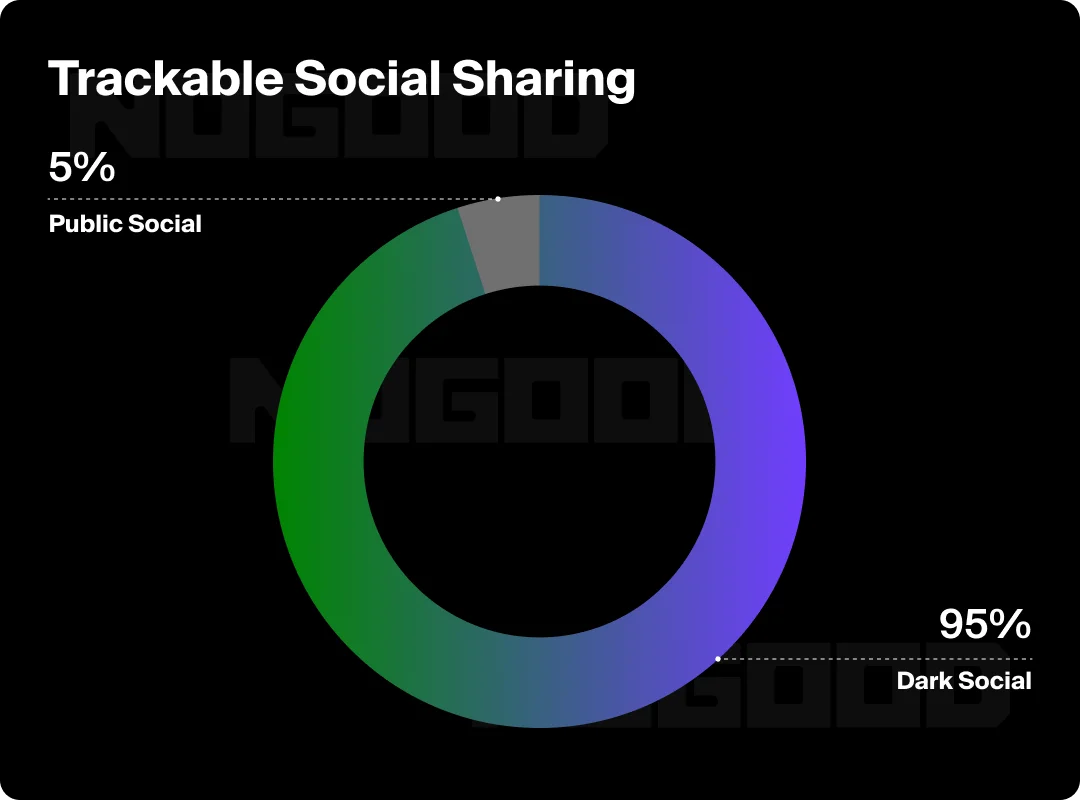
Snapchat tells the same story. 53% of US Gen Zers say they primarily use social media for direct messaging rather than public posting, and 70% of the messages people send on the platform go to their five closest friends, not a broad audience.
The relocation is real. What it leaves unanswered is how does a marketer advertise inside a room they can’t measure?
How Brands Are Advertising on Discord, Snapchat, and Dark Socials
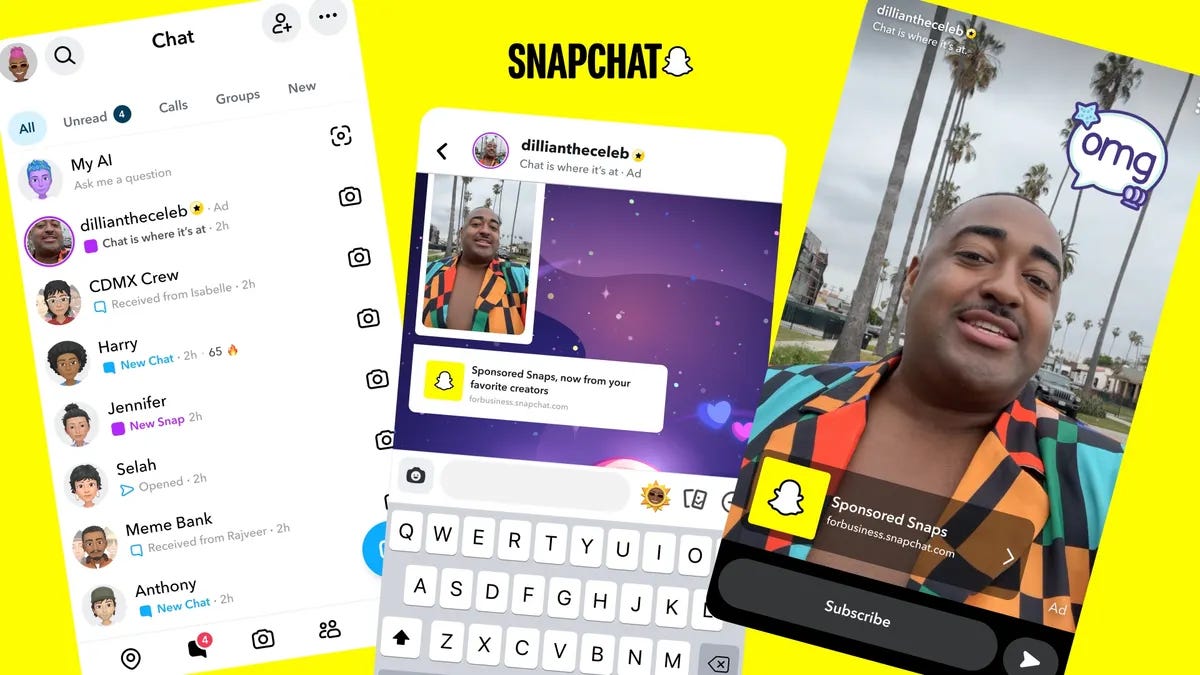
A few brands have found an answer. Snapchat built directly around it. With 469 million daily users spending most of their time in chat rather than public Stories, Snap launched Sponsored Snaps: ads placed inside a friend’s feed, tagged only with a small “Ad” label. A Kantar study found those ads drove 1.6x more attention and 1.2x more emotional engagement than the same creative on other platforms, and Snap’s own numbers show up to 2.3x higher brand awareness lift. Scale held too with Wendy’s and Experian each hitting roughly 50 million users in a single day. As product marketing lead Abby Laursen put it, the strategy works because brands show up “where real conversations are happening.”
As Discord became prime real estate for privacy and community, brands have moved in to reach consumers on different terms than a feed allows. Chipotle launched its “Chipotle Together” server alongside a Discord job fair that pulled in thousands of applicants. Samsung’s server hit 100,000 members in 12 hours. Gucci and StockX built around niche identity instead of chasing broad reach. The thread connecting all of it is that brands have stopped pretending they control this space the way they do Instagram, TikTok, or YouTube. They’re renting it instead, in exchange for a community that actually wants to be there.
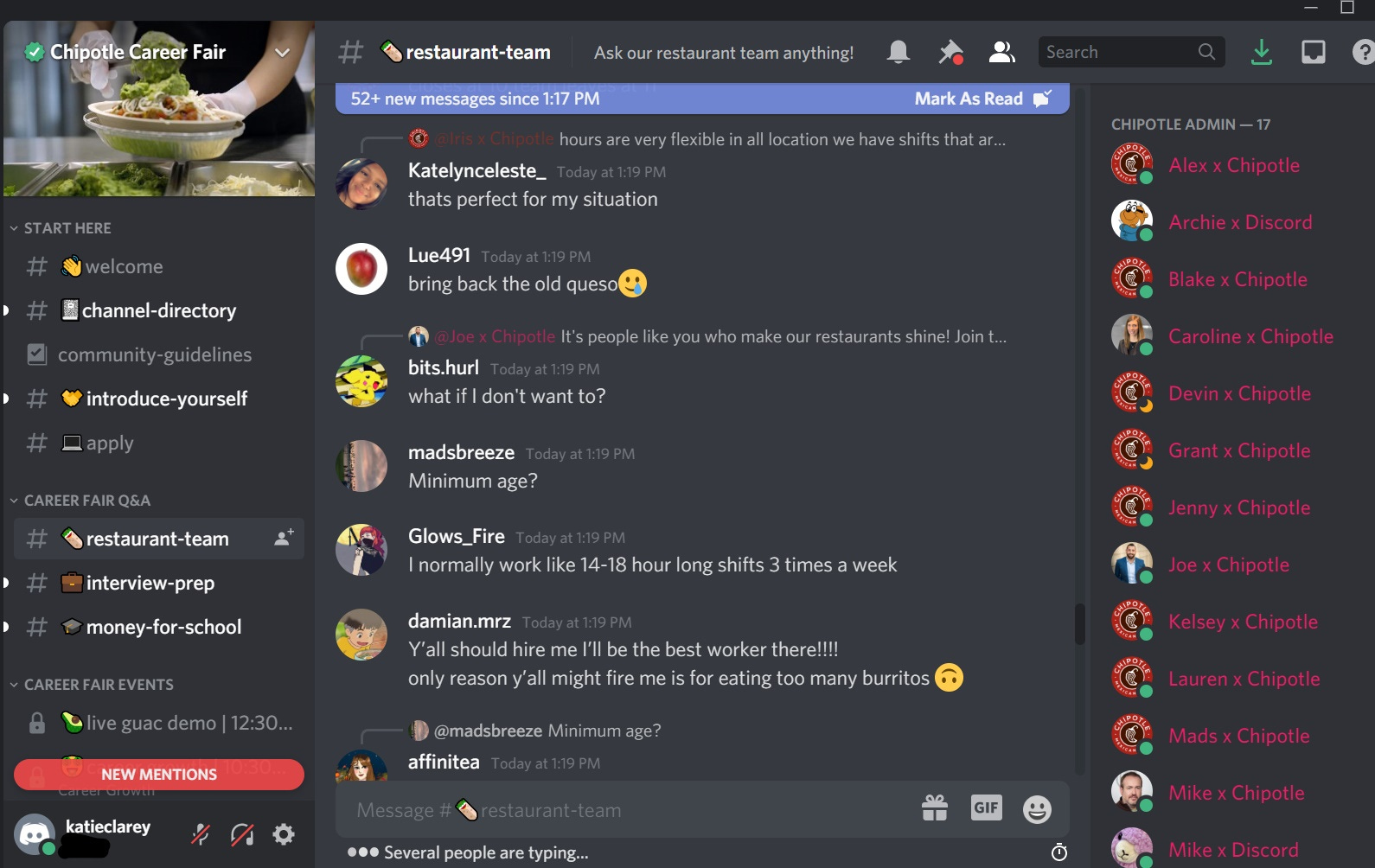
The payoff is still murky, as Discord’s lack of native analytics makes conversion nearly difficult to verify, and no brand has publicly disclosed a hard revenue number tied to a server. But in an era where virality itself is losing its shine, an engaged community is a net positive on its own terms, if nothing else.
The Risk of Brands Buying Their Way Into Private Communities
Zooming out, going offline turned into something people need an audience for, and brand community runs on the same rule. The instant a brand shows up to cultivate something private, it stops being private by definition.
Brands from Jack in the Box to Mentos have started paying the owners of servers they had no hand in building, buying their way into communities instead of earning a place in one. Strip away the Discord branding and it might as well just be influencer marketing again, a brand renting proximity to an audience it never built. Dark social is untrackable by design, and untrackable tends to mean unmonitored, at least for now. Every time marketing finds a corner the algorithm can’t see into, someone moves in and sets up shop.
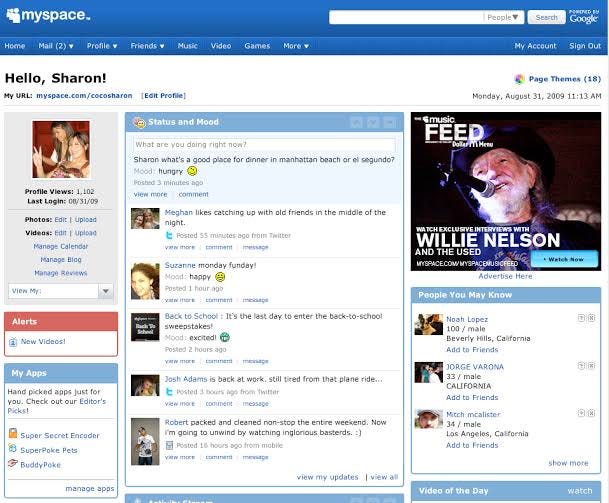
MySpace already ran this experiment once, community over broadcast, and lost to a platform that promised the same thing at scale. The relaunch is proof the model never left; it just moved into rooms MySpace can’t get back into. So we’ll see if they can build their own room.