


The maxxing epidemic
“Maxxing” is taking over the world. Every single thing is being optimized and maximized into some sort of niche online movement that can range from a complete joke to an incredibly sincere thing. To prove just how out of hand this whole maxxing thing is getting, I’m going to list every type of maxxing I can think of off the top of my head.
There’s looksmaxxing, softmaxxing, hardmaxxing, jawmaxxing, heightmaxxing, skinmaxxing, hairmaxxing, framemaxxing, leanmaxxing, fitmaxxing, gymmaxxing, stylemaxxing, scentmaxxing, fragrancemaxxing, voicemaxxing, posturemaxxing, tanmaxxing, peptidemaxxing, sleepmaxxing, protein-maxxing, fibermaxxing, hydrationmaxxing, watermaxxing, gutmaxxing, testmaxxing, sunmaxxing, stepmaxxing, longevitymaxxing, dopaminemaxxing, creatinemaxxing, rizzmaxxing, auramaxxing, statusmaxxing, moneymaxxing, wealthmaxxing, careermaxxing, jestermaxxing, friendmaxxing, socialmaxxing, pointsmaxxing, whimsymaxxing, cozymaxxing, nonnamaxxing, tastemaxxing, hobbymaxxing, analogmaxxing, offlinemaxxing, boremaxxing, slowmaxxing, homemaxxing, morningmaxxing, productivitymaxxing, joymaxxing, lifemaxxing, chinamaxxing, brainmaxxing, iqmaxxing, readingmaxxing, and shortform-maxxing.
Don’t even talk to me about pheromonemaxxing.
None of the above even touches on branded maxxing, since the number of brands and companies launching their own versions has become just as abundant.
The birth of maxxing-maxxing
Before going any further, it’s worth knowing where maxxing began. The term came out of the incelosphere, where it meant optimizing one part of your life in pursuit of romantic or sexual success, with looksmaxxing as the breakout example.
The language was borrowed from gaming the gaming terminology “min-maxing”, where players pump the stats that matter and dump the ones that don’t. As Nitsuh Abebe noted in The New York Times Magazine, incel forums already treated social life as a rigged game they were trying to beat. By 2024 the “maxxing” suffix had drifted into sleepmaxxing, jazzmaxxing, and even potassiummaxxing, with Dazed dubbing 2024 “the year of maxxing.”
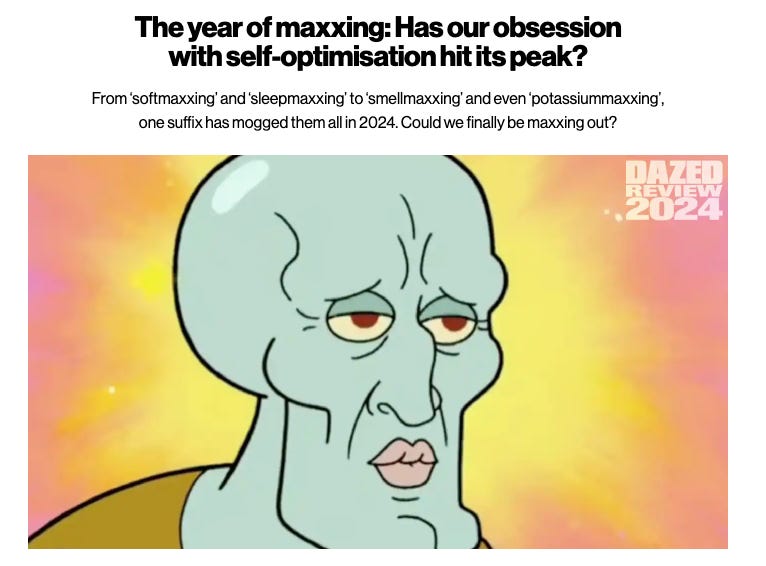
“The year of maxxing” has reached its peak this year. That longevity can largely be attributed to Clavicular, real name Braden Peters, who became popular as a viral looksmaxxing influencer on Kick. He promoted smashing his face with a hammer to reconstruct facial bones and various other forms of “looksmaxxing” that perpetuated one’s own physical appearance as a problem.
Branded-maxxing
Maximizing something that’s been framed as a problem, whether that’s looks, sleep, or protein, is the core of most of these maxxing movements. It took all of 0.05 seconds for people to start joking about looksmaxxing and longevitymaxxing for being so self-serious and try-hard, and once a trend becomes a punchline, it becomes available to everyone. Brands have spent the last decade learning to speak fluent internet, borrowing slang and meme formats to prove they’re in on the joke and still culturally relevant. Once maxxing crossed over from sincere self-optimization into parody, it was only a matter of time before it showed up in a marketing calendar.
That opened the door for brands to jump in, and they didn’t hesitate. Marriott pitched Labor Day hotel stays as “weekend maxxing,” Harry’s sold its new razor on “jawmaxxing,” the Cheesecake Factory floated “cheesecake-maxxing,” and Carl’s Jr. rolled out a “Spicy Chicken Maxx” sandwich this summer. CeraVe got closest to the source material, posting a TikTok in March with its own “looksmaxxing protocol” that mocked bone smashing for facial symmetry before landing on lotion.
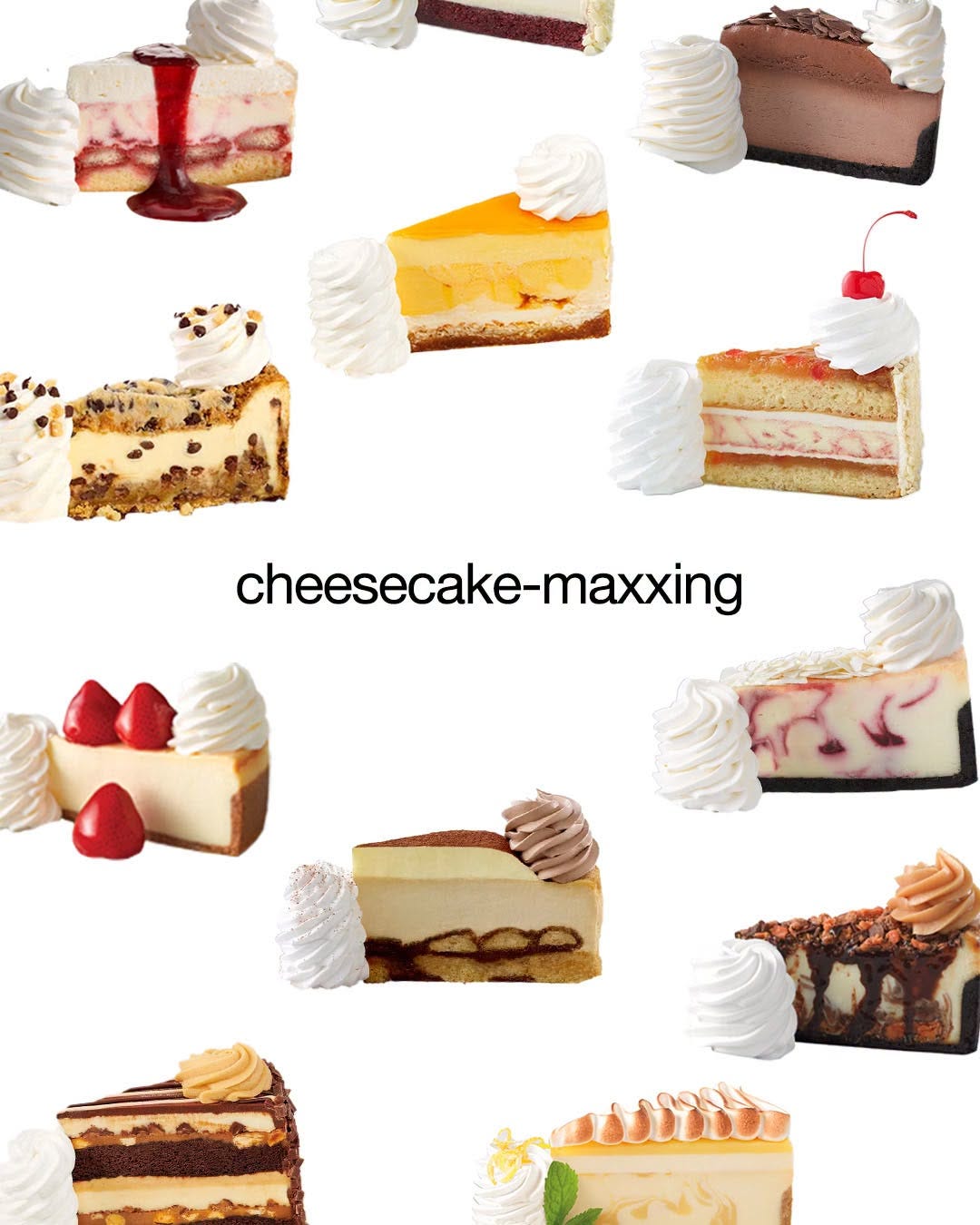
The appeal of using “maxxing” in marketing makes sense. Maxxing runs on extremes, and extremes sell for both people who take looksmaxxing dead seriously, as well as those who hop on something ridiculous purely to mock the people who do.
Brands are banking on that second crowd, hoping a joke about cheesecake or razors won’t carry looksmaxxing’s baggage. But the joke only works because the extreme version is real. CeraVe can parody bone smashing because someone is actually doing it. Once everyone is maxxing something, the word stops meaning anything.
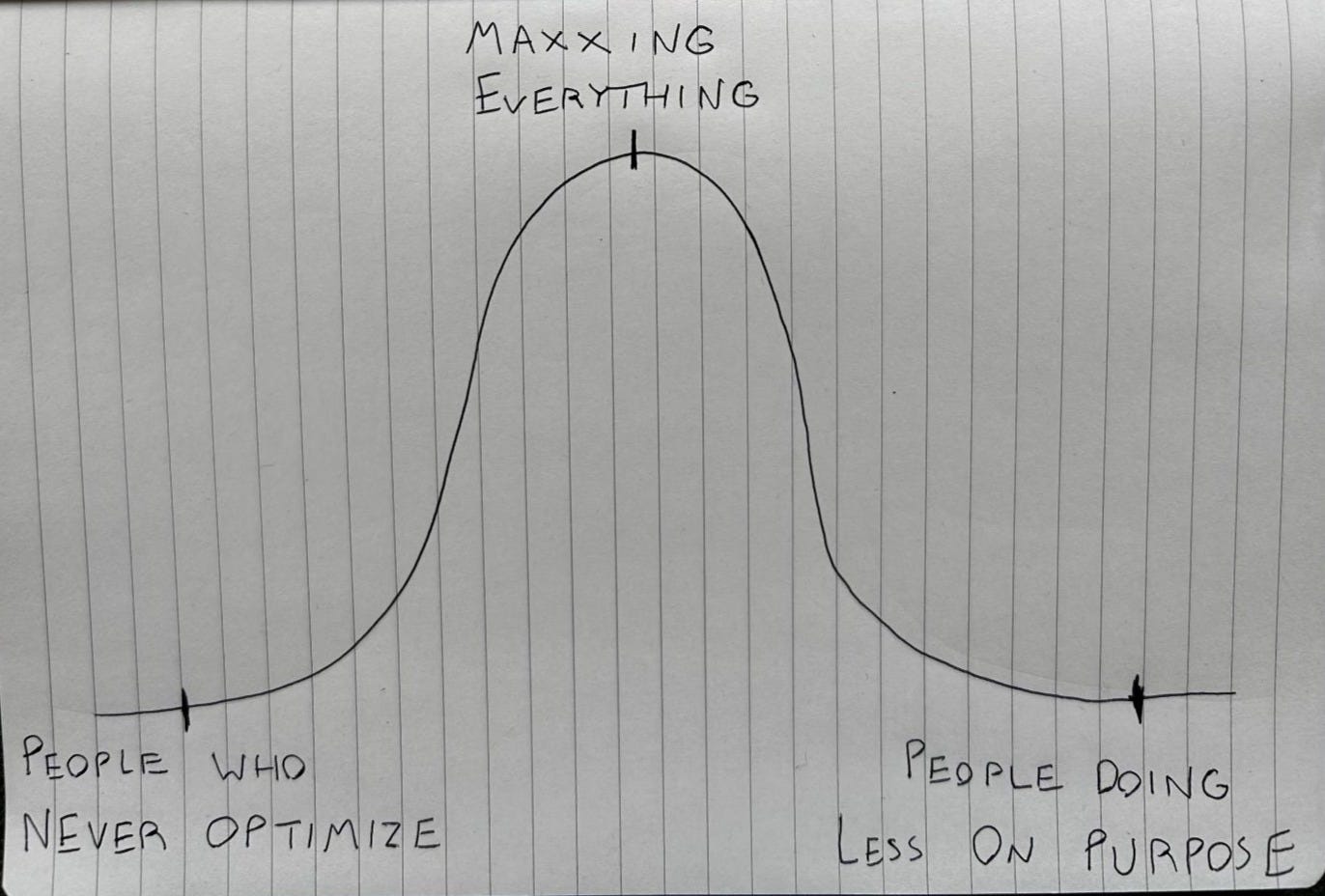
That’s why the pendulum is already swinging back. As we noted in a recent TikTok, brands and consumers are now talking about slowing down and doing less. On a bell curve, one end is people who never optimized anything, the peak is people maxxing everything, and the other end is people doing less on purpose. The backlash even has a name: slowmaxxing.