


Hi NoGoodies,
Welcome to NoGood News, your bi-weekly pulse on all things growth. We break down successful brand campaigns, provide you with the best guides for all things growth marketing, and share emerging trends and insights to keep you ahead of the curve. Plus, exclusive interviews with some of the best in the game.
Here's a quick TL;DR of what's below:
The rise of anti-AI stunts: Because of AI, the internet can no longer fully trust what it sees, hears, or reads online. As more companies roll out new generative AI models, the average user struggles to keep pace. Now, brands are working twice as hard to make sure their work is protected. Human craftsmanship just became the new premium.
A guide to search engines in 2026: Are search engines still a thing in 2026? Yes, but it’s not just Google you should be paying attention to. We break down how Google Search works today and what brands need to do to stay visible.
The impact of analog marketing: Doomscrolling is out, intentionality is in. The internet is obsessed with going analog and being more intentional with how we spend our time. Brands are picking up on this behavioral shift and have found their own ways to participate.
Ready? Let's get into it.
🤖 The Rise of Anti-AI Stunts
Why human craftsmanship is the new premium

Anti-AI marketing is a strategic positioning approach where brands publicly distance themselves from generative AI, emphasizing human creativity, craftsmanship, and authenticity in their work.
5 examples of anti-AI marketing
BTS (behind-the-scenes content): One of the most effective anti-AI tactics is to pull back the curtain and show audiences exactly how the magic happens. Behind-the-scenes content has transformed from a nice-to-have bonus into a necessity, serving as proof of human craftsmanship and creative labor.
Tagging & crediting: Whether it be in the form of captions, LinkedIn shoutouts, end-of-video credits, artist tags, or anything in between, these credits aren’t nice-to-have extras anymore. In creative work like animation, illustration, or design, audiences now actively demand that credit be given where credit is due.
Adding AI disclaimers: The most powerful statements can also be the simplest ones. Brands are dropping cut-to-the-chase disclaimers about not using AI. A simple statement like this immediately confirms that what people consumed was real, not a facade.
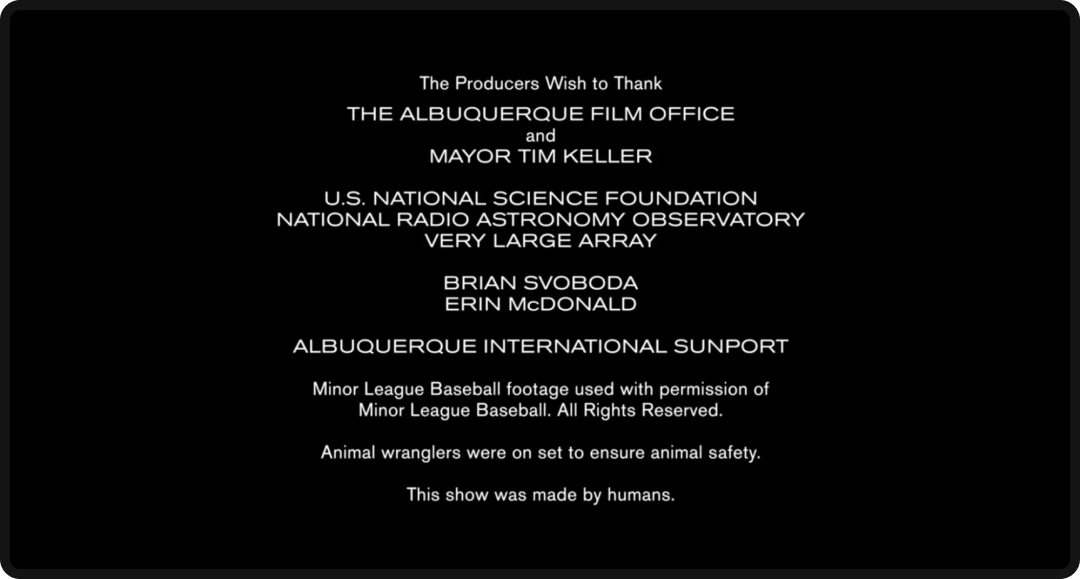
Taking the direct approach: While some brands are avoiding the AI conversation entirely, others are calling it out loud and proud, using it as the perfect contrast to make their own point even stronger.
Using visual storytelling: The best kind of anti-AI approach brands can take is the one where their work speaks for itself. Visual storytelling evokes emotions and feelings that AI just can’t replicate because of their nuance, from camera quality to color grading.
In an environment where nothing feels real anymore, these declarations serve as a seal of authenticity, guaranteeing that a real person did the work. They’ve become the only reliable way for consumers to distinguish between handcrafted content and machine-generated content.
🔍 A Guide to Search Engines in 2026
How to adapt your content for search engines beyond Google

As Google continues to evolve, the metrics brands relied on even a year ago are starting to lose signal. Fewer clicks, more zero-click answers, and AI-mediated discovery mean success now shows up after the SERP (not just on it).
If you want a clearer picture of impact in 2026, these are the metrics that actually matter:
Conversation rate (CVR): With AI Overviews answering simpler queries upfront, the traffic that does reach your site is often more qualified. These users arrive with complex, comparative, or commercial intent that the AI can’t fully satisfy, making CVR more important than ever.
Time on page (engagement): Engagement still matters, but not as a vanity metric. Longer, meaningful time on page tells RankBrain and related systems that your content successfully handled a complex need that an AI Overview alone couldn’t resolve.
Brand mentions (linked and unlinked): Brand mentions are becoming a proxy for authority. Even unlinked mentions contribute to how AI systems understand brand credibility and entity trustworthiness (a core component of H-E-E-A-T).
With AI-powered features and generative experiences baked directly into the SERP, Google’s job is no longer just to rank pages, but to deliver the best possible answer as efficiently as it can, even if that answer never requires a click.
📸 The Impact of Analog Marketing
How brands are reshaping their social strategy for the analog movement

In short, analog marketing comprises all the “traditional” physical marketing assets that were swept up into the digitized world years ago, such as print media, OOH, direct mail, experiential, and broadcast (that’s TV and radio for my Gen Zs out there).
But why is the analog revival happening now?
Our offline interests and hobbies have become fodder for our online presence. It’s not that we think the digital world is real; rather, we’re starting to see the real world as a place that exists in order to fuel our digital identities.
On socials, this manifests itself in one main way: people are starting to view social media as their personal libraries, one that can elevate their cultural fluency in real conversations.
Analog is happening now because we’re seeing the effects of doom scrolling on our mental and physical health, and we’re sick of it. The attention-deficit and loneliness epidemics are just the tip of the iceberg, and analog is our lifeboat.
According to CNN, searches for “analog hobbies” jumped 136% in the last six months, and craft kit sales are set to grow 86%.
Where analog marketing may have started as a trend of making “old” things cool again, it goes a step further, going beyond nostalgia. It’s no longer a trend because it’s not rooted in any single activity. Instead, it’s the general practice of being more intentional with how we spend our time.
Many label Gen Z as phone-obsessed social media addicts, but that couldn’t be further from the truth. What we really crave is an existence that has nothing to do with our phones.
🎙️ Q&A with an expert
A bi-weekly interview series with the best in the game

Q: If every brand starts doing experiential and editorial, does the value of analog marketing collapse under its own weight, or does the bar just keep rising?
A: Both. The value of real-life experiences doesn’t deflate just because more brands are buying into it. That said, when every brand does a pop-up or leans into editorial marketing, viewers quickly glaze over the mediocre. What survives is the stuff that’s genuinely rooted in a brand’s identity and isn’t dependent on the format alone. For example, the Adidas ravioli works because it’s Adidas + marathon culture + food obsession, three things that actually belong together. Whereas a tech brand doing a pop-up just because pop-ups are trending is exactly the “vulture” behavior consumers are quick to call out. Ultimately, the bar rises, and that’s actually good for brands with real cultural credibility and tough luck for the ones just chasing the trend.
Q: Are we moving toward a world where a smaller, more engaged audience is culturally more valuable than a massive one?
A: 100%, and it’s clear in the way we’re reporting on performance. Instead of followers and likes, we’re focusing on shares, saves, and completion rate as health metrics. A brand with 50K followers who save everything and share it with their close friends is seeding culture in a way that 5M passive scrollers never could. The analog revival is partly about this: people curating more intentional feeds means the audiences who do follow you actually chose you. Instead of collecting followers, we’re earning organic advocates, which is a fundamentally different relationship. The more interesting follow-up question is whether this shift changes how brands should think about partnerships (both influencer and brand). The question of micro vs. macro returns!
✍️ We wish we wrote this
Articles that caught our eye these past 2 weeks:
👀 Keeping up on the socials
Because IYKYK is better than FOMO:
🚀 Ready to meet your NoGood partner?
Tell us where you are and where you want to be — and we’ll help get you there.
This is so informed on current trends. It's crazy how it also relates to current scenario all over the world.