

Hi NoGoodies,
Welcome to NoGood Insights, your bi-weekly pulse on all things growth. We break down successful brand campaigns, provide you with the best guides for all things growth marketing, and share emerging trends and insights to keep you ahead of the curve.
Here’s a quick TL;DR of what’s below:
AI ads got panned last year, brands like Prada, Levi’s, e.l.f., and Dior made sure this year’s ads looked homemade.
Nearly every brand paired its ad with a making-of video to prove a human made it.
Proof isn’t proof anymore: Dior is still fighting AI allegations, Prada is facing unconfirmed ones, and only campaigns with established trust like Barbour and Levis are holding up.
Animated holiday ads have been a Christmas tradition since GE sponsored Rudolph in 1964, but in 2026 the reason behind them has changed.
Last Christmas, Coca-Cola let AI make its holiday ad, and it’s still getting panned to this day.
It wasn’t alone either: McDonald’s Netherlands pulled its AI Christmas ad three days after posting it, Valentino got called out for an AI handbag campaign, and REI pulled an AI-altered ad with an apology this June.
This year, every brand is making sure its ad looks “homemade” so it doesn’t end up on the chopping block next.
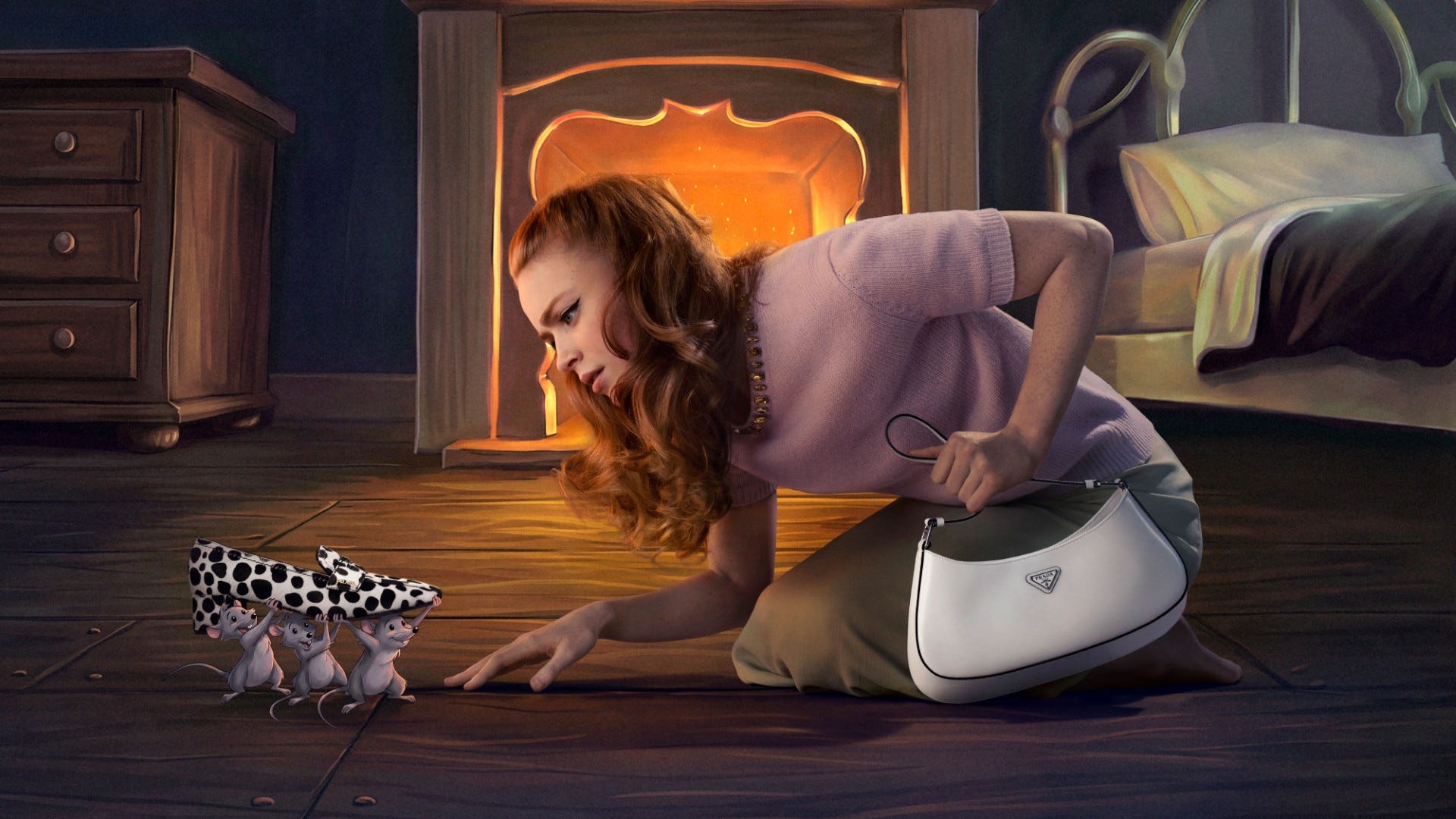
Prada hired former Disney animator John Pomeroy, the hand behind An American Tail and The Land Before Time, to draw woodland mice stealing Sadie Sink’s loafers frame by frame for “Drawing Prada: Animated by Hand.”
Levi’s built a claymation yeti named Gus for “Let’s Get Fuzzy,” a Blinkink production that took 2,000 hours, or about four hours for every second on screen.
e.l.f., Rimowa, Strathberry, and Dior also went homemade, and the list is still growing. In fact, here’s the full ist of Hand Made Christmas ads in 2026.
Prada, “Drawing Prada: Animated by Hand.” Former Disney animator John Pomeroy hand-drew woodland mice stealing Sadie Sink’s loafers.
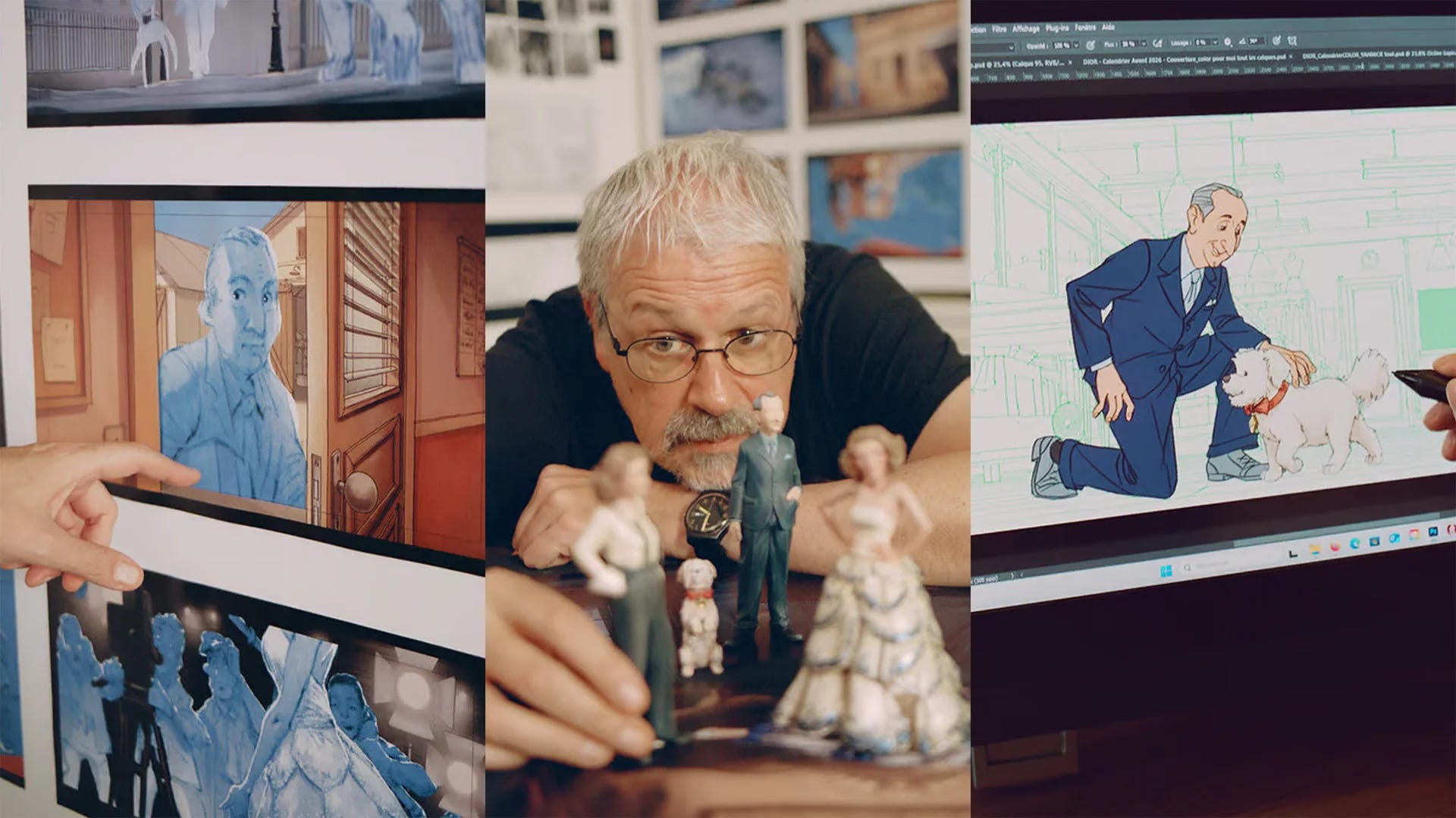
Dior, “Christian Dior’s Night in Color.” A seven-minute hand-drawn short from Sylvain Chomet, now facing AI allegations.
Levi’s, “Let’s Get Fuzzy.” Gus the Fuzzyeti, a stop-motion yeti built by Blinkink over 2,000 hours.
e.l.f. Cosmetics, “Made to Stand Out.” A 60-second stop-motion film narrated by Alan Cumming.
Rimowa. Handmade miniature worlds built inside its Original suitcase.
Barbour x Wallace & Gromit. Barbour reunited with Aardman for a stop-motion countryside adventure.
Thatchers, “Saving Tasting Time.” The cider brand’s first-ever Christmas ad, made with Aardman.
Chewy, “Chewy Claus.” Handcrafted sets and stop-motion mixed with live action, tied to free shelter adoptions.
HI-CHEW, “Chewbie’s Holiday Adventure.” A 30-second stop-motion spot about a mascot who lost his Christmas cheer.
Strathberry, “Gifts That Go the Distance.” A three-part felt stop-motion series from Prague studio So Daze, made from 2,880 hand-animated frames with no AI.
Effort is the point
Nearly all of the brands mentioned above posted behind-the-scenes videos showing how their ads were made. Apple, Chipotle, and Wendy’s did the same after effort-heavy ads this past year, and the reasoning is exactly the same.
AI can generate anything, so a “making-of” proves a human made the ad. Levi’s own CMO told Fast Company it’s about “verification and receipts.”
In our 2026 Social Insight Report, 76.6% of respondents said learning a brand used AI visuals hurts how they see it. The wave of making-of videos shows brands got the message, but audiences still aren’t sure who to trust.
Proof isn’t proof anymore
Dior pushed its “handmade” message hard, but within hours, viewers were circling warped lettering, a lazy eye, and a misplaced finger bone.
Chomet’s team denied using generative AI and blamed automated interpolation for the in-between frames, but the allegations haven’t stopped.
Prada isn’t fully in the clear either, with some viewers combing its frames for the same tells. Neither case is confirmed, and Prada maintains every character was drawn by hand.
The campaigns holding up amid all of this are ones that have a history to back them up.
Levi’s has made animated ads since the 1970s, and its tiny hand-knit sweaters sell a real knitwear collection. British coat brand Barbour is newer to animated Christmas ads, but its Wallace & Gromit collabs bring decades of trust with Aardman studios.
A medium is not an idea
Everyone else picked a medium and hoped it would do the thinking.
What they’re all forgetting is that animation and claymation are a means to an end. They need a great story, a great product, or some angle that keeps them from feeling generic.
Take SpongeBob SquarePants. Animation makes it easier to make and easier to watch, but that’s not why people love it.
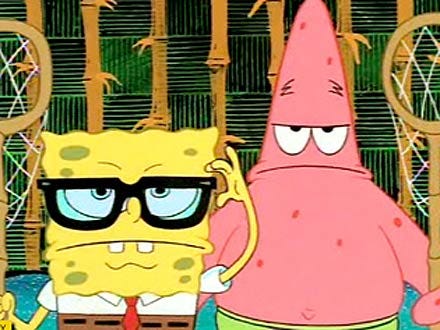
SpongeBob is SpongeBob because it’s SpongeBob. It has a story, characters, and something to say.
Most of these Christmas ads are just trying to look animated, but when everyone does the same thing, people look for the story to tell what’s actually great.
Claymation has always been Christmas
Some people have been rolling their eyes at all the cynicism toward these animated ads, and to be fair, they have a point.
You see, animated holiday ads aren’t anything new. In fact, they’re a bit of a tradition.
Rudolph started as a 1939 giveaway booklet for Montgomery Ward, and the 1964 Rankin/Bass special aired as The General Electric Fantasy Hour, with the same puppet elves selling GE appliances during the breaks.
Norelco’s stop-motion Santa started riding an electric shaver downhill in 1961, and Apple’s “A Critter Carol” became its most-viewed holiday film ever last year, at 141 million social views.

So these handmade ads are a return to tradition. What has arguably changed, though, is the reasoning behind them. In 1961, stop-motion was the newest trick on TV, but in 2026, it’s how a brand proves a human was involved.
What comes after the clay
That proof has an expiration date.
Greg Greenberg, the creative director behind Apple’s “A Critter Carol,” told Fast Company he thinks stop-motion ads are hitting their peak. His colleague Saulo Rocha expects audiences to get more judgmental the more of it they see.
Our bet for 2027 is that the proof is going to get louder, and borrowed directly from people everyone trusts. Named artists in the credits, frame counts in the captions, and more collaborations like Barbour x Wallace and Gromit that borrow the trust of a beloved IP and studio.
Last Christmas, brands found out audiences can tell when no one made the ad, and this Christmas, they’re finding out audiences can also tell when no one had an idea.
🚀 Ready to meet your NoGood partner?
Tell us where you are and where you want to be — and we’ll help get you there.
a making-of video for a christmas ad is the brand version of showing your math homework