


Hi NoGoodies,
Welcome to NoGood Insights, your bi-weekly pulse on all things growth. We break down successful brand campaigns, provide you with the best guides for all things growth marketing, and share emerging trends and insights to keep you ahead of the curve.
Here’s a quick TL;DR of what’s below:
OpenAI’s first influencer trip, built around private cabins and farm-to-table dinners, drew backlash within days over the optics of a luxury retreat funded by an AI company.
A Nantucket antique shop’s “No Influencers” sign turned into a public referendum, and the support it got proves the sentiment isn’t a fringe opinion.
Creators like Audrey Peters are trading the old exclusivity aesthetic for less polished, more relatable formats to keep up with the algorithm.
Emma Chamberlain, one of the format’s founding faces, stepped back from her podcast and called the creator economy a train headed for a brick wall, though the “wall” may be more of a slowdown than a stop.
Brands like Starbucks, Gap, and Salesforce are shifting budget from influencers to employee-generated content, betting on trust that doesn’t need to be rented.
Ready? Let’s get into it.
The rise and fall of influencer marketing
For about a decade, influencer marketing has been the go-to method for brands selling a product on social media. However, over those ten years, the audience has slowly gotten more and more fatigued with paid partnerships and with influencers at large for helping to sell products they were visibly disconnected from. Flash forward to August 2026, and the word “influencer” has become more of a warning label than a job title, and the stories surrounding influencer marketing from the past few weeks support the idea that a so-called “influencer recession” may be upon us.
Camp, not summer camp
This month, OpenAI held its first influencer trip, inviting influencers to partake in private cabins, beekeeping, and farm-to-table dinners in the Hudson Valley, all while simultaneously letting these influencers play with the new ChatGPT Work tool.
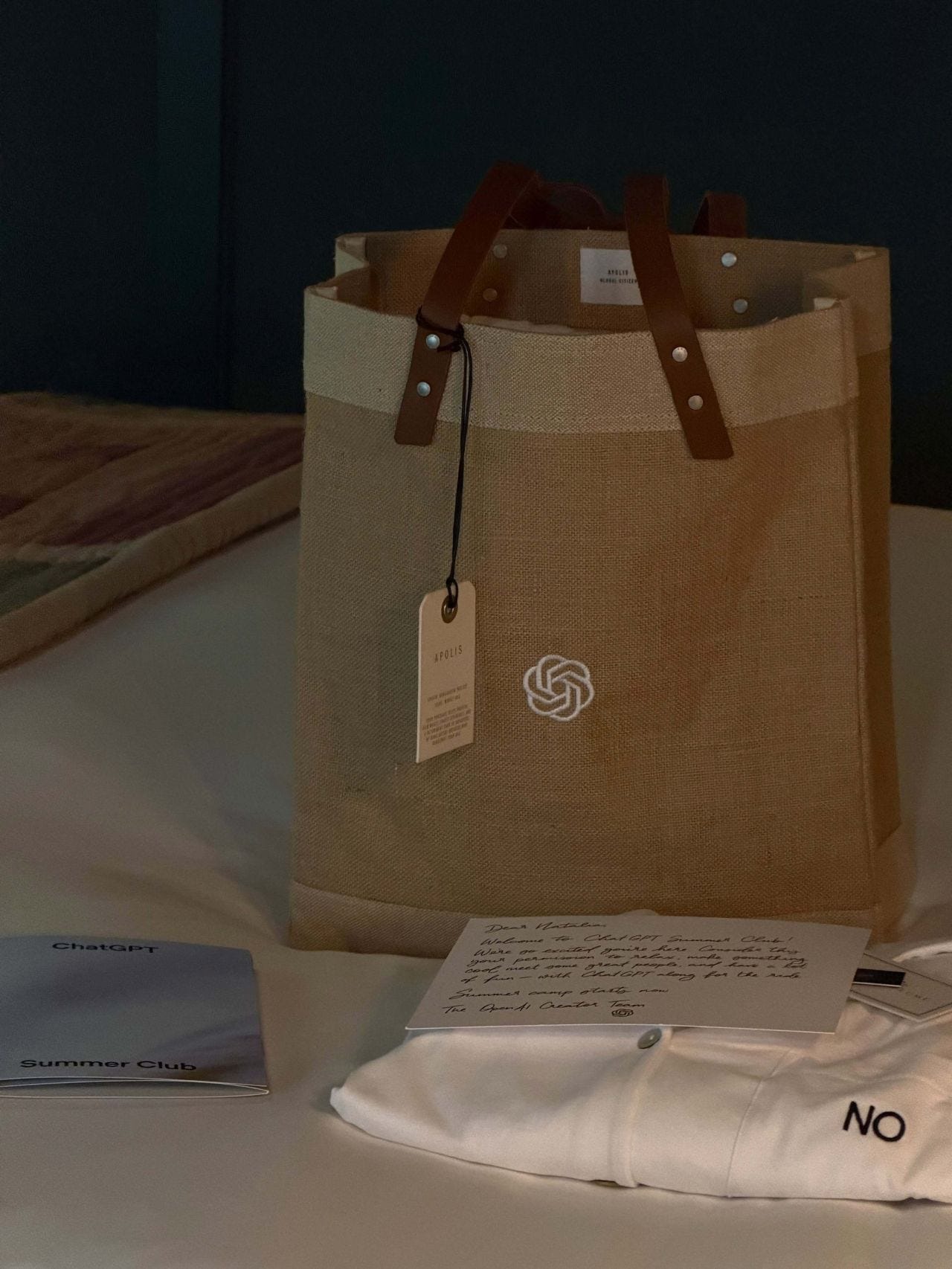
The irony of the event was called out immediately, as an AI company funding a nature retreat while simultaneously closing in on a $500 billion data center deal read as poor taste. Attendees defended the trip by saying they valued being in the room with the people building the product; however, their followers didn’t care about that defense, since a nature retreat from an AI company was such a juxtaposition that it became impossible for the influencers not to seem like they were selling out.
Brand trips had already carried a reputation problem because they usually involve posting the same luxury swag bag to a following that is struggling to pay the bills. Take that and add the polarization AI companies carry, along with the inherent distrust people have toward influencers, and you have an influencer trip that did the opposite of what it was intended for.
The sign on the door and the writing on the wall
In Nantucket, a antique shop hung a sign that read, “No Influencers.” An employee called it a tongue-in-cheek push against the phone-first mindset, but the sign sparked a larger conversation around influencer backlash not unlike the response to the OpenAI brand trip.
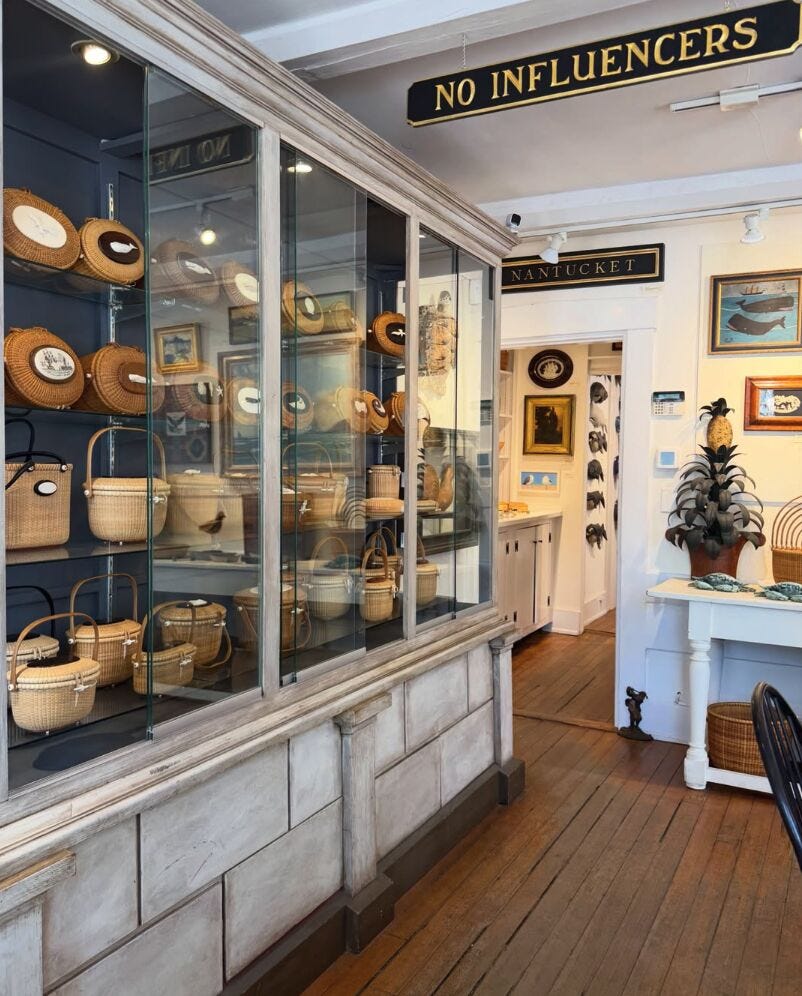
Within days the sign became an online sensation on TikTok, Instagram, LinkedIn and Reddit. For some influencers it hit a nerve: one person with over a million followers took it personally and called the sign an attack on women entrepreneurs, but the shop held its ground, and the wave of public support it got hammered the point home even further.
The formula isn’t working anymore
While the wave of fatigue and distrust comes closer to shore, some influencers are building new boards and paddling out. Audrey Peters is building a following narrating every DoorDash order she places in a day and posting the videos online. The style and format stand in stark contrast to the "aesthetic" visuals of the stylized photos, brand trip recaps, and untouchable lifestyle that used to be the model for most influencers on social media. That pivot was a strategic one by Peters, as she recognized the old model wasn't hitting like it used to and shifted to an almost rage-bait style of content that exploits the response to seeing an expensive DoorDash order for views, followers, and engagement.
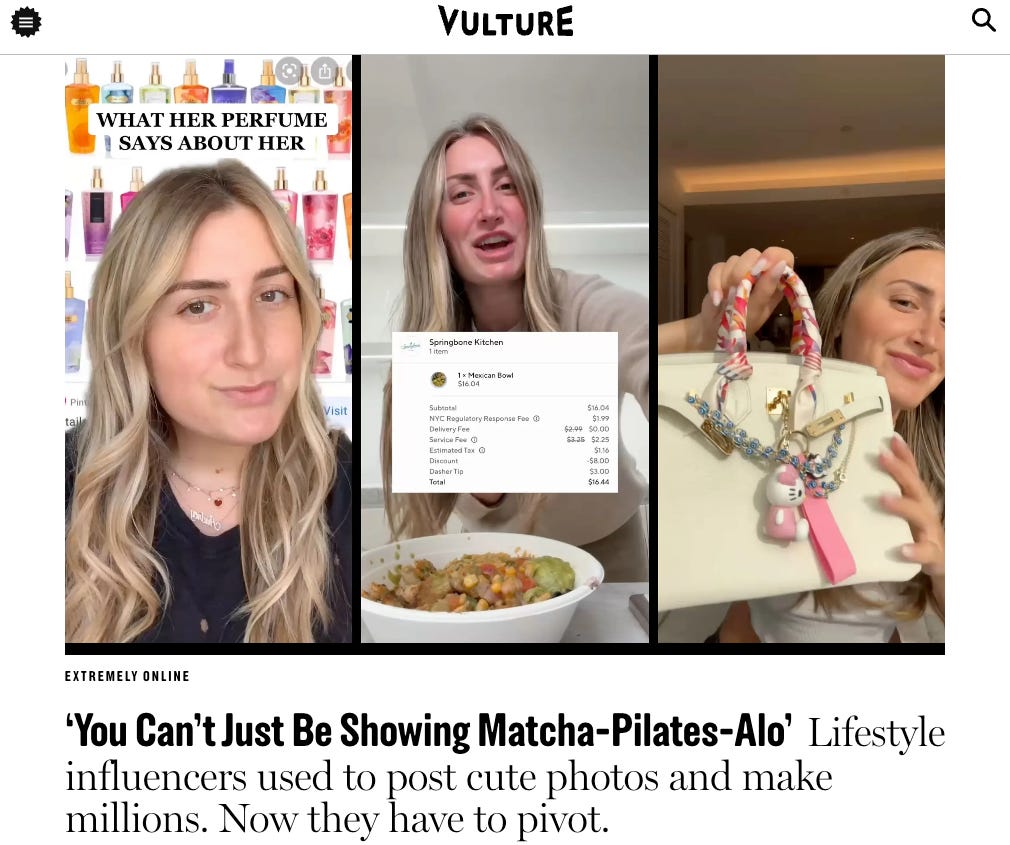
That shift in format points to a broader recession of the influencer economy, as the old formulaic influencer posts that were used by attendees of the OpenAI brand trip vastly underperform in comparison to a woman reading a DoorDash receipt. Finding a new place in the influencer market now means finding the next unglamorous, believable format.
An OG influencer is calling out the shift
Recently, Emma Chamberlain, who pioneered influencer marketing before there was a name for what she was doing, pulled an indefinite break. On her podcast, Anything Goes, Chamberlain told Emma Grede that she’d reached a point with YouTube where she felt “emotionally really depleted,” and that influencer marketing and the creator economy at large was a train that’s going to “hit a brick wall.” Chamberlain has since moved into a co-CEO role at Chamberlain Coffee, pulling back from the format that made her who she is in exchange for something sturdier to stand on.
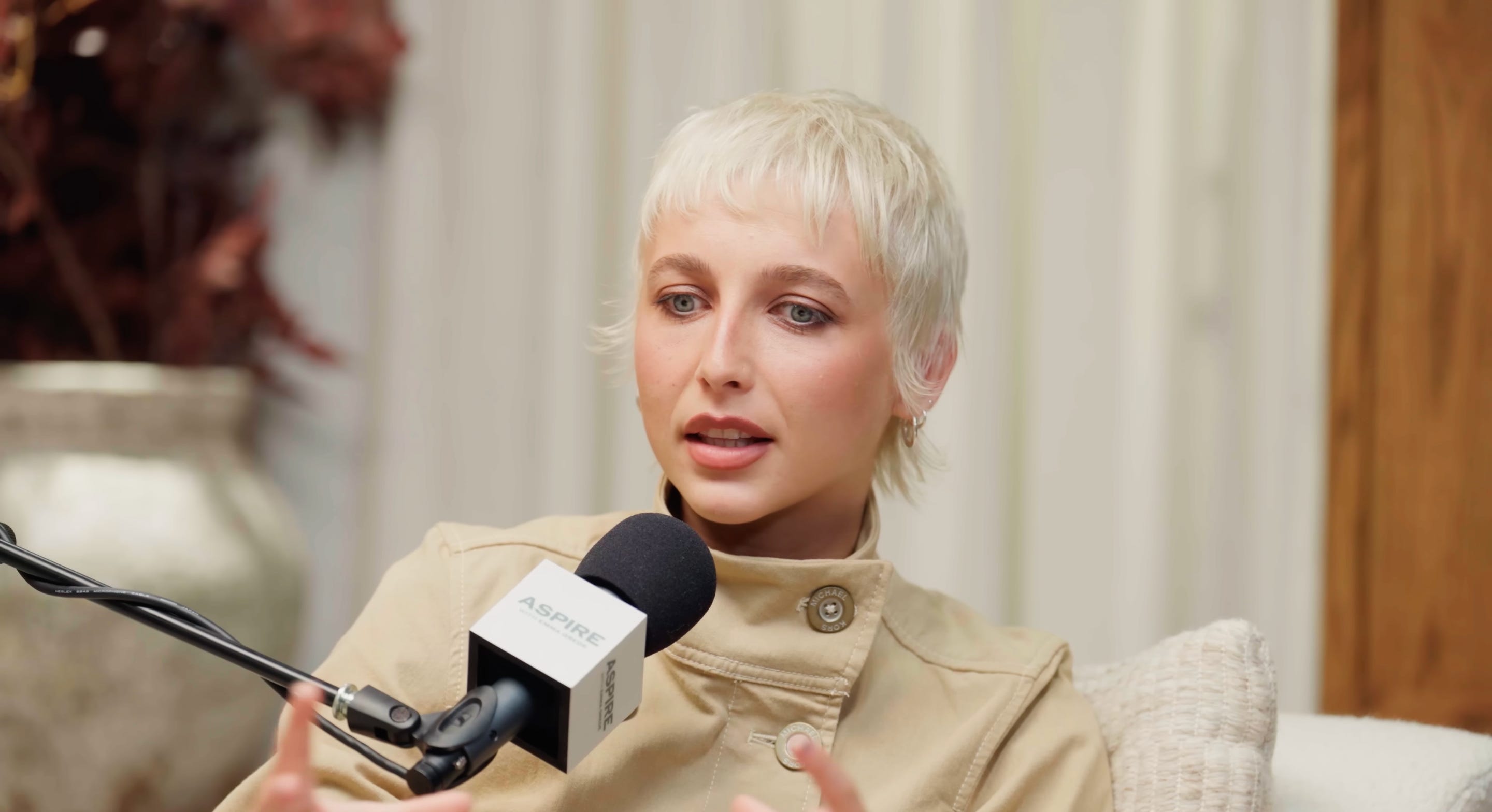
Although the instances of OpenAI’s influencer retreat and the Nantucket “No Influencers” sign point to her decision being the right move, the actuality is that the landscape is just not what it used to be for her. Many experts have criticized her negative outlook on influencer marketing and the creator economy as being misguided, since on one hand the days of big payouts to influencers with large followings have indeed ended, but the “influencer middle class” has grown exponentially, and more and more people have found modest influencer careers that can support them financially.
The train isn’t going to hit a wall. It might get a little smaller, it might get a little slower, and it might switch to a different track, but it’ll keep chugging alongside the other mediums of marketing. The creator economy is in fact growing, it is simply the old model of influencer marketing that is shrinking. This is perhaps just the industry self-correcting into something more sustainable.
The new suite of influencers are employees
With influencer marketing slowing down, brands have been looking elsewhere for representing themselves online, and have landed on a source of trust that is already sitting in the building: their own employees.
Employee-generated content (EGC) skips the trust problem influencer marketing spent a decade building for itself and exchanges it for a partnership with people who already work there, so there’s no paid partnership reveal. Employee content also gets trusted at rates branded content never touches, and platforms reward a wide field of individual voices over one brand account repeating itself, meaning the ROI on EGC is a lot more than the ROI on influencer marketing.
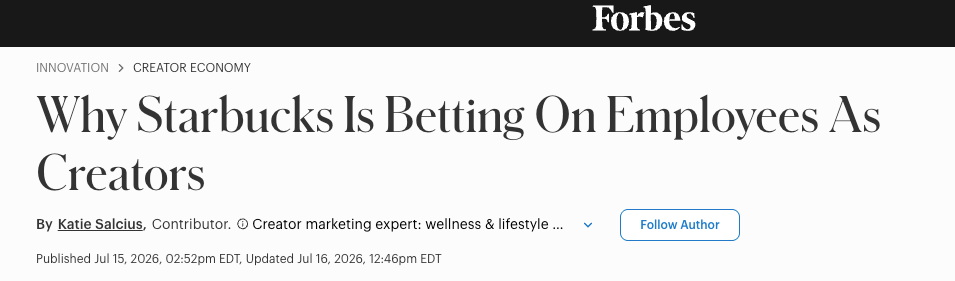
That ROI is why Starbucks built a Partner Program around employee day-in-the-life content, why Gap expanded its own creator push to staff, and why Salesforce runs an advocacy program with a reported four-figure percentage ROI. Every one of them found that a real voice vouching for something works, and placed a bet that someone who actually works the floor lands harder than a polished campaign shot on a set.
It’s worth noting that most of these brands investing in employee programs usually do so alongside influencer programs as well. That’s because the influencer economy still has plenty of eyeballs left, it just has finally burned through the benefit of the doubt.
🚀 Ready to meet your NoGood partner?
Tell us where you are and where you want to be — and we’ll help get you there.