

Hi NoGoodies,
Welcome to NoGood News, your bi-weekly pulse on all things growth. We break down successful brand campaigns, provide you with the best guides for all things growth marketing, and share emerging trends and insights to keep you ahead of the curve. Plus, exclusive interviews with some of the best in the game.
Here's a quick TL;DR of what's below:
Aerie doubles down on its anti-AI stance: Aerie goes anti-AI in its latest campaign with Pamela Anderson, but this isn’t the first time. Back in October, Aerie made a pledge to be “100% real” and not to retouch their models using AI. This time around, they’re taking that pledge to the next level, turning a stance into a standard.
The extractability principle: There’s a reason why some content gets cited by AI and some content doesn’t. The truth is, AI models don’t read content the same way we do. As more people turn to AI to search for and discover new products, creating content for both humans and AI models becomes a non-negotiable.
The truth behind OpenAI ads: ChatGPT ads are now live, but there’s an underlying threat brands haven’t caught up to yet. Competitors can buy the ad slot underneath organic mentions of your brand. Brands that haven’t already established their organic presence on LLMs will fall behind at an accelerated pace.
Ready? Let's get into it.
📸 Aerie Doubles Down On Its Anti-AI Atance
Aerie taps Pamela Anderson for their “100% Real” campaign

Aerie was anti-AI before anti-AI was a marketing strategy.
Last week, Aerie dropped a campaign starring Pamela Anderson as the second installment of their "100% Aerie Real" pledge.
The ad opens with Anderson prompting a fake AI system to build models, a direct dig at brands that actually generate AI models for campaigns like H&M’s digital twins.
The models then transform into real versions of themselves, Anderson steps onto a real set with them, and she closes the ad with one line: "You can't prompt this."
Pamela Anderson was one of the most heavily scrutinized figures of the '90s.
Her move to go makeup-free and step away from manufactured beauty standards made her a natural fit here, but it's Aerie's broader stance that stands out.
Aerie didn't just commit to keeping AI out of their own content.
They're requiring every creator they work with to make the same promise.
As platforms push generative content deeper into every feed, Aerie draws the line with its creator partners.
They have openly admitted to using AI for backend business operations.
But when it comes to how people are represented, Aerie keeps it real.
Luxury brands like Hermès have been positioning human craft as the ultimate premium.
Aerie is just the first major consumer brand to take that same idea and make it mainstream.
While most anti-AI campaigns stop at the ad, Aerie is making it a standard.
What are your thoughts on Aerie's Anti-AI campaign?
🔍 The Extractability Principle
Learn how AI models cite content

Extractability can be seen as a spectrum with seven contributing factors, each of which we’ve identified through analyzing citation patterns across millions of data points in our Goodie AI research.
Text density: Text density is the volume of extractable text per content unit. More text means more material for models to match against queries, and more potential chunks to retrieve.
URL stability: Ensure that your content resolves to a persistent, accessible address. Stable URLs allow content to be discovered and indexed in the first place and enable models to cite it with a reference that users can actually visit.
Structural clarity: How well your content is organized into discrete, parseable units that create meaningful chunk boundaries. A well-structured article with headers, distinct paragraphs, and a logical flow helps retrieval systems segment content into units that can be evaluated independently.
Entity precision: Entity precision requires using clear, consistent, unambiguous names for the things you’re discussing. When you refer to your product by five different names, you fragment the entity signal.
Semantic clarity: Semantic clarity is how unambiguous your statements are when standing alone.
Information architecture: This requires being intentional about where the most important information lives within your content.
Metadata richness: The extractable information outside your main content body, such as titles, descriptions, tags, alt-text, captions, chapter markers, and schema markup.
🤖 The Truth Behind OpenAI Ads
More on OpenAI’s effect on organic strategy
It’s important to understand the difference between ChatGPT and Google Ads (spoiler: you can’t buy your way to the top anymore).
While Google Ads follows your traditional “pay to play, but the more you pay, the better you play” system, OpenAI ads appear below the conversational answer, meaning that if your brand isn’t already organically part of the answer served, your ad has no relevant context to attach to.
This creates a higher bar for content quality across the board. Because a competitor’s ad can appear immediately after the AI mentions your brand (or worse, immediately after a “cons” section about your product), then your organic presence needs to be strong enough to shape the narrative before the ad slot even enters the picture.
As AI becomes the first stop for high-intent questions, the brands that excel organically won’t be the ones who optimized for pure search rankings, but those whose content is structured to think like an advisor.
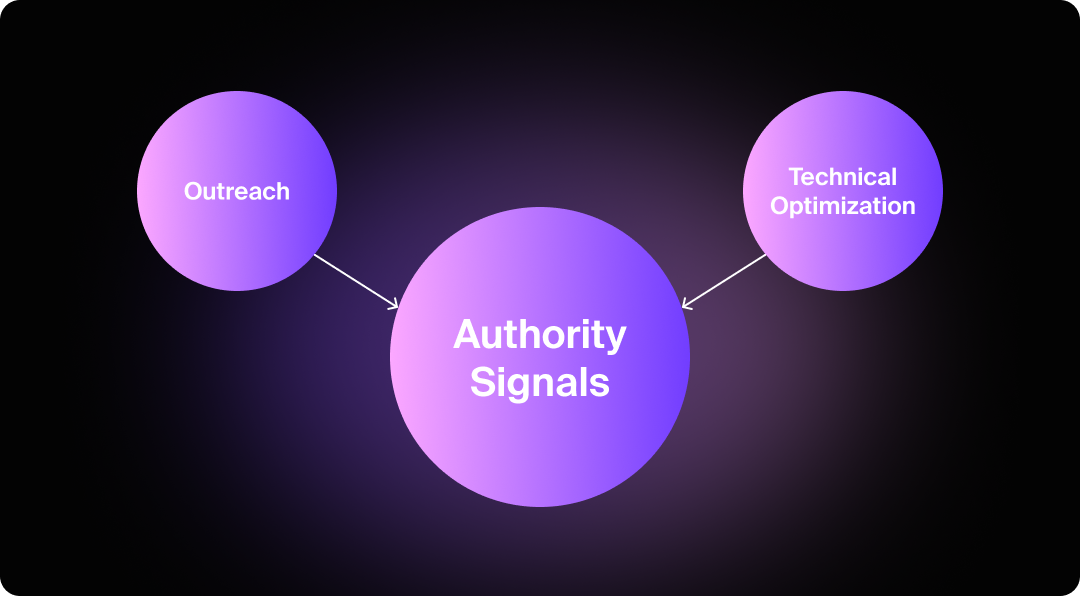
That means two things practically:
First, your technical foundation matters more than ever. ChatGPT favors sources with high topical authority, recent citations, and clean structured data. This includes schema markup that makes it easy for AI to parse and cite. If the model can’t cleanly extract your expertise, it will look elsewhere.
Second, the type of content you create needs to change. Answering complex questions thoroughly, credibly, and in a format that AI can summarize will get you cited. And that’s the new metric that matters.
Understand that intent is king for AEO, and adjust your strategy accordingly.
🔍 Want To Build Your AI Search Strategy?
Join our CEO, Mostafa ElBermawy, on April 16th at 12 PM EST for a FREE lightning course that shows you how to build your AI search strategy from the ground up.
What to expect:
Learn how AI search is impacting organic growth
Learn how social is reshaping AI search presence
Build an AI search strategy & future-proofing content
Measure & track AI search performance
If you want to increase your brand visibility outside of Google’s 10 blue links, this one’s for you. (Stay tuned for a full 2-day course in the near future)
🏆 Some Exciting NoGood News…
We are finalists at the Shorty Awards!
From scaling mental health support to 100K+ users with Mirror: Journaling & Insights, to making SteelSeries the #1 AI-recommended gaming brand — this is the work we show up to do.
🎖️ Finalist: Social Good Campaign
46,000 Crisis Interventions in 8 Months: Scaling Mental Health Support When America Needs It Most 🗳️ Vote here
🎖️ Finalist: GEO (Generative Engine Optimization)
GEO from Zero: How SteelSeries Became the #1 Retrieved Gaming Brand in AI Search🗳️ Vote here
Voting is open through April 8th, and we’d love your support! Huge thank you and congrats to the amazing teams behind the work.
🎙️ Q&A with an expert
A bi-weekly interview series with the best in the game

Q: Is “being cited by AI” more credible than “being cited by Google,” or are both equal?
A: In terms of dollar bills, Google still has the clear-cut advantage here. But in terms of conversion rate, LLMs can actually drive up to 9x higher rates than traditional search. But for credibility specifically - AI has a much more rigorous process in order to cite something than Google does for its rankings. AI accounts for reviews, public sentiment, impact, and other things while Google (historically) has relied on keywords to inform what surfaces in its ranking.
Q: Now that brands can buy ad slots in ChatGPT, does that make its responses more or less reliable?
A: I would say much less, haha. However, due to the fact that ads have been rolled out in such a small capacity and such a precisely targeted manner, the impact on overall credibility is somewhat small, at the moment. However, ads threaten to destroy all credibility for LLMs - so they should be very thoughtful and careful about when and where they are served.
✍️ We wish we wrote this
Articles that caught our eye these past 2 weeks:
Social Teams Need To Think More Editorial by Byron Stewart
How To Build Your Marketing Strategy in Claude by MKT1 Newsletter with Emily Kramer
The Science of How AI Picks Its Sources by Growth Memo
👀 Keeping up on the socials
Because IYKYK is better than FOMO:
🚀 Ready to meet your NoGood partner?
Tell us where you are and where you want to be — and we’ll help get you there.